CarelineOS
Multi-tenant SaaS platform
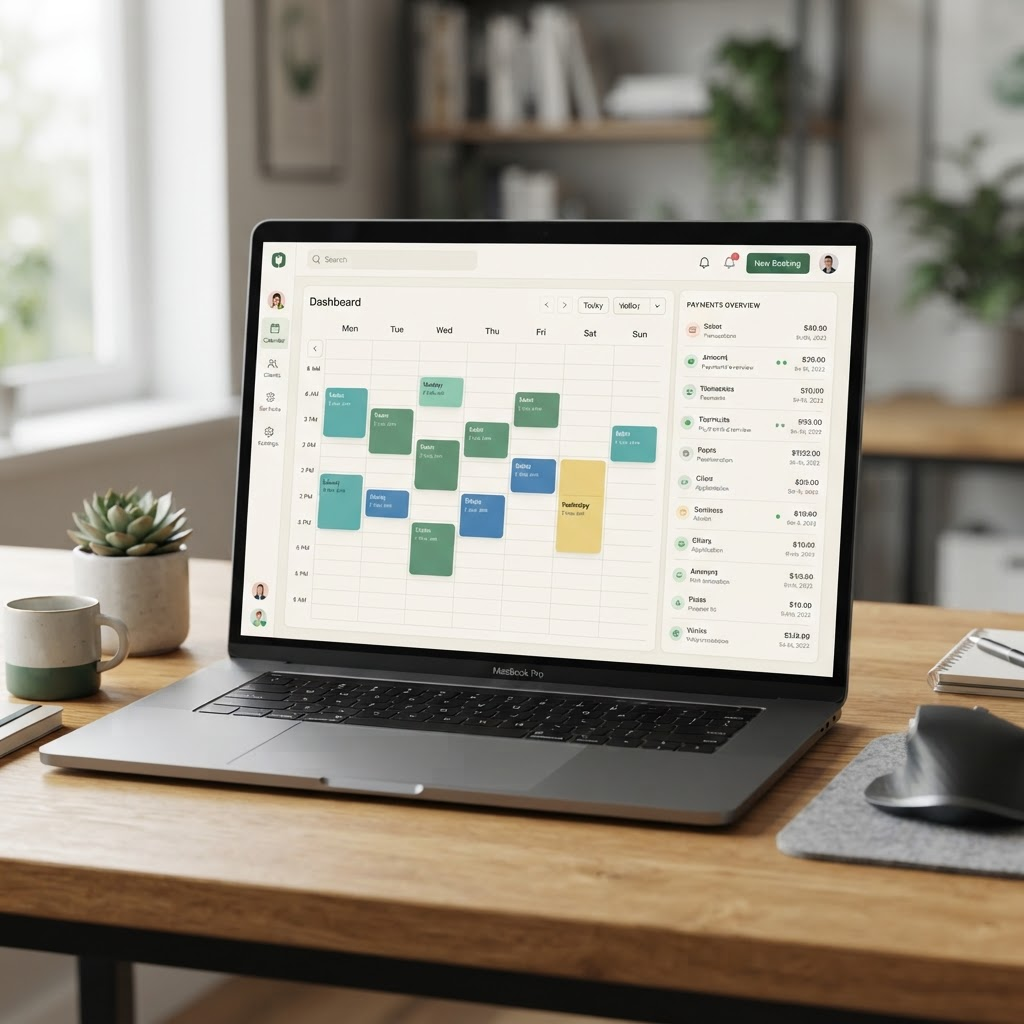
An operating system for appointment-based service businesses — booking, payments, memberships, clinical records, and a lead-gen engine in one platform.
The challenge
Appointment-based service businesses run their operations across a patchwork of tools — one app for booking, another for payments, a spreadsheet for memberships, and nothing that connects the front desk to marketing. The goal was a single operating system a service business could actually run the whole day out of.
“One place to run the entire operation — and quietly generate new business while it does.”
The approach
- 01
Modeled the domain around a vertical-agnostic core: clients, appointments, staff schedules, point-of-sale, memberships, and retainers — so the same platform fits a salon, a clinic, or a studio.
- 02
Built a Hono API layer with strict org-scoped multi-tenancy so every business’s data is isolated behind a single, auditable boundary.
- 03
Designed three distinct surfaces — a staff-facing operations app, a polished public booking site, and a platform-staff admin portal — each with its own information density.
- 04
Layered a lead-generation engine on top so the platform doesn’t just record business, it helps create it.
- 05
Audited every shipped API route against the product’s own screens, and marked the ones with no interface as “coming soon” on the marketing site rather than claiming them.
Design iteration
From micro-frontends to one calm consolidated app
The most meaningful iteration here was architectural. An earlier version was built as a micro-frontend experiment — a shell host reverse-proxying between independent “zones” with browser-direct database queries. It was clever but fragile. The rebuild consolidated everything into a single Next.js application behind a proper API layer, added org-based multi-tenancy where the original was single-tenant, and introduced a four-palette theming system on top of light and dark. Simpler architecture, far more room to grow — and the room turned out to matter: the same core now runs two further products.
The partnership
How we worked together
Because this was a platform we kept expanding, staying in direct, constant contact mattered more than any spec document. We worked in tight loops — I’d ship a surface, we’d try it against a real workflow together, and adjust before moving on. When the early micro-frontend architecture started fighting us, I raised it plainly and we made the call to consolidate together, instead of quietly papering over it. One person held the whole picture, from data model to public booking site, so nothing got lost in a handoff.
What we built
Highlights of the work
Booking & scheduling
Calendar-driven appointments with staff scheduling and availability at the core of the product.
Payments & memberships
Point-of-sale, recurring memberships, packages, gift cards, and retainers handled in one system.
Records & compliance
Clinical charting with PHI-scoped permissions, plus access and audit logs for the businesses that need them.
Public booking site
A conversion-focused front door that turns visitors into booked appointments.
Lead-generation engine
Built-in tooling to attract and capture new business, not just manage existing clients.
Capabilities demonstrated
Add these to your own project
Let’s talk
Have a project, or a product that could work harder?
Most projects begin with a short, no-pressure discovery call.